Rat or Mouse? How Pantry Evidence Changes the Next Step
Pantry evidence can show where an animal is feeding, but droppings and damage alone do not identify every species. Use location, size, timing, and building clues to plan a safer next step.
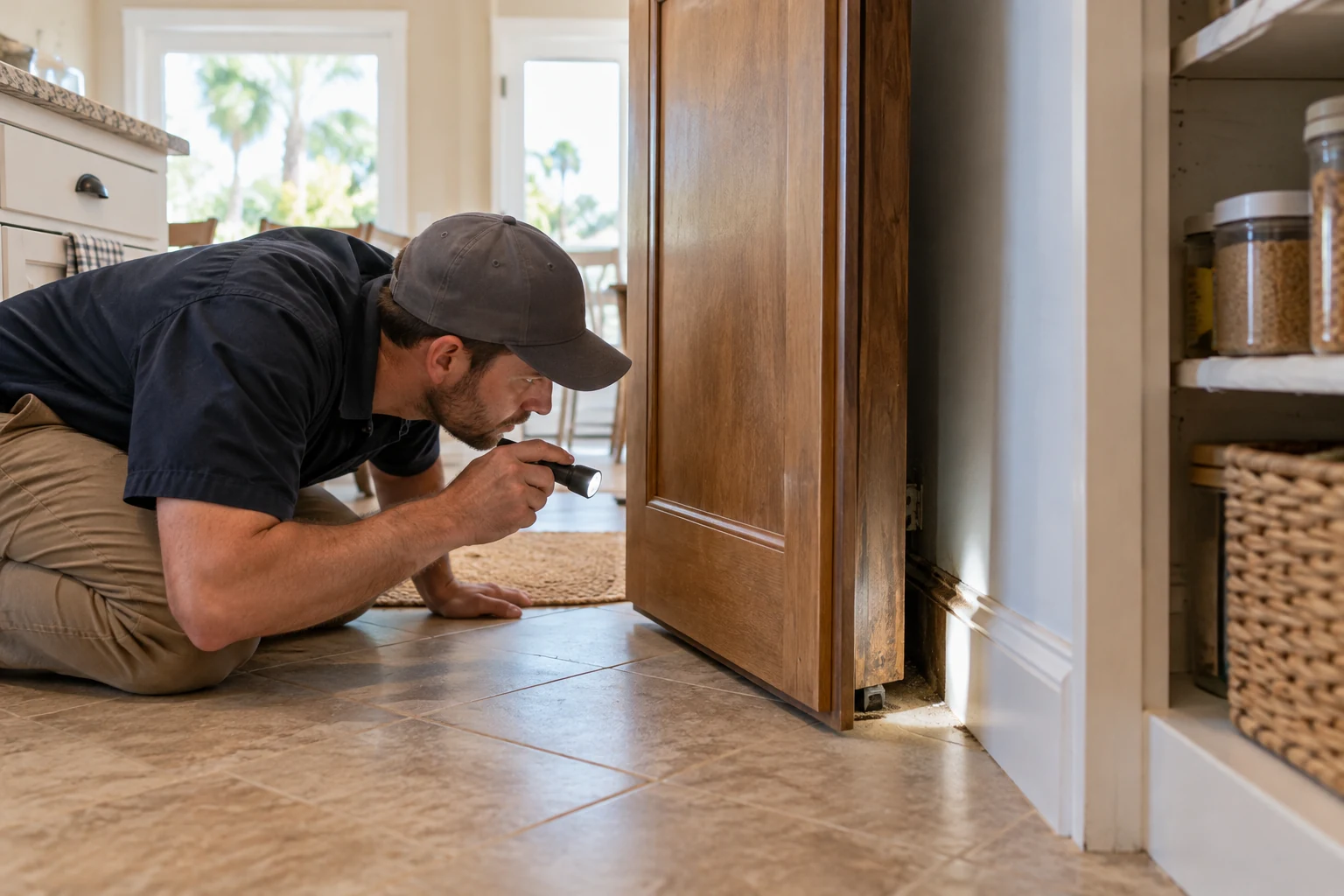
Quick answer: Protect food first, then document droppings, gnawing, packaging damage, and travel edges. Species guesses from one dropping are unreliable; a route-based inspection can determine whether you need mouse control, rat control, cleanup, exclusion, or another response.
What pantry signs should you look for?
Check food packages, cabinet corners, drawer tracks, the space behind appliances, and the floor under shelving. Look for holes, shredded packaging, droppings, grease marks, nesting fibers, and food moved from its original place. Photograph the evidence before clearing the area when it is safe, because the pattern can show how the animal travels.
A pantry sign does not always mean the nest is in the kitchen. Rodents may enter from a garage, wall void, attic, crawl space, or utility opening and visit the pantry for food. The right plan follows the route to the building edge instead of treating the pantry as an isolated room.
- Chewed bags, boxes, or plastic
- Droppings along cabinet or wall edges
- Food moved or stored in hidden corners
- A stale odor near a pantry or appliance
Can droppings identify a rat or mouse?
Dropping size and shape can provide a clue, but they are not a reliable species test by themselves. Age, moisture, diet, and the location of the material can change how evidence looks. Do not pick up droppings to compare them. Photograph the area, keep people and pets away, and let the inspection consider the whole pattern.
The important first decision is not a perfect label. It is whether the evidence is fresh, where the route runs, and whether food or household areas are affected. A provider can explain what is confirmed and what remains uncertain before recommending rat control, mouse control, trapping, removal, sanitation, or exclusion.
- Use photos instead of handling waste
- Record the room and exact location
- Note whether signs are fresh or old
- Do not make a species claim from one clue
How should you protect pantry food?
Discard food with chewed, punctured, wet, or contaminated packaging. Move unaffected dry goods into sealed, washable containers. Clean the outside of containers before placing them back. Do not shake bags or sweep loose material into the air. If contamination is widespread, pause and get a cleanup plan before returning the pantry to normal use.
Do not forget pet food, bird seed, snacks, and trash. These items can keep a route active even after the main food shelf is cleaned. A clean pantry is helpful, but it cannot close a hole behind a cabinet or stop access from a garage, wall, attic, or crawl space.
- Use sealed food containers
- Remove contaminated food packaging
- Clean surfaces using an appropriate method
- Store pet food and seed away from access edges
What is the difference between rat and mouse behavior?
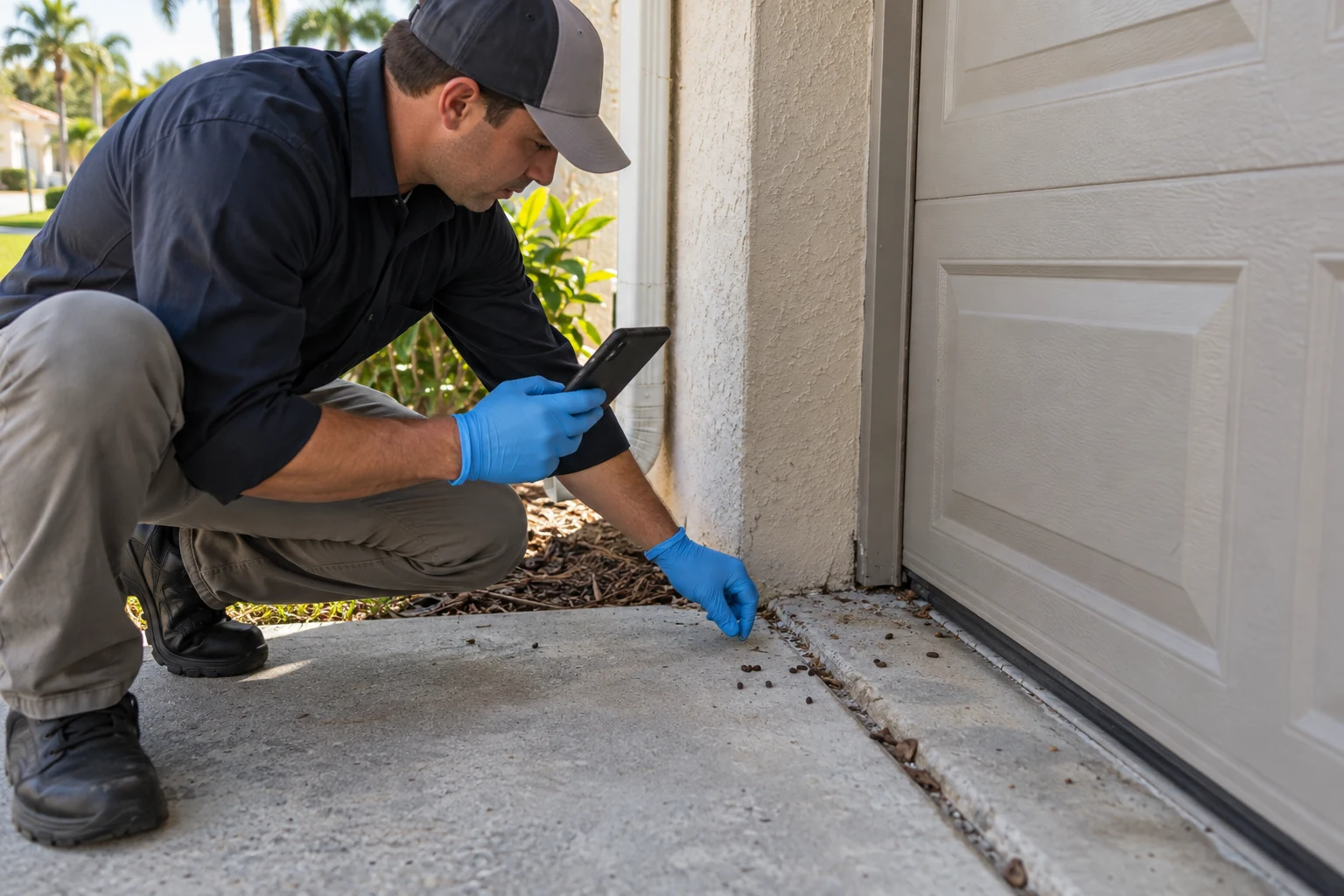
Rats and mice can use different spaces, food sources, and routes, but behavior overlaps. A small mouse may use tight interior edges and cabinet voids. A rat may create more visible damage or travel from a garage, attic, crawl space, or exterior route. These are general clues, not a diagnosis.
The building matters as much as the animal. A pantry beside a garage may have a different route from a pantry below an attic or beside a shared wall. Inspection should connect food evidence to doors, thresholds, plumbing, cabinets, wall voids, and roofline conditions.
- Map the pantry to nearby walls and doors
- Check the garage or utility side of the room
- Look for routes behind appliances
- Treat behavior as a clue, not proof
When should you call for pantry rodent control?
Call when signs repeat, food is contaminated, damage increases, activity appears during the day, or you find evidence in more than one room. Also call promptly for chewed wiring, strong odor, nesting near an air-handling area, or activity that continues after food is secured.
Ask whether the visit includes inspection, removal or trapping, sanitation, exclusion, and follow-up. The first recommendation may be different for a single mouse route and an established rat route, but both should be based on evidence and the building conditions that support access.
- Fresh evidence returns after cleaning
- Food or packaging is damaged
- You hear movement in walls or ceilings
- The route extends beyond the pantry
How do cleanup and exclusion protect the kitchen?
Cleanup removes contamination from appropriate surfaces and helps the household use the area safely again. Exclusion addresses the access route. If only the pantry is cleaned, a rodent may return through a gap behind a cabinet, at a door sweep, around a pipe, or from the garage. Both the room and the route need attention.
The repair should preserve normal plumbing, electrical, ventilation, and appliance access. Ask what will be sealed, what requires another trade, and how the provider will check the work. Avoid stuffing materials into a hole that carries heat, water, or electrical components without a safe plan.
- Clean affected hard surfaces appropriately
- Review cabinet and appliance edges
- Close door and utility transitions
- Plan follow-up if signs continue
West Palm Beach pantry prevention tips
Warm weather can keep homes and garages active year-round, while storms and outdoor food storage can change routes. Keep trash closed, limit accessible food near garages and patios, and maintain door sweeps and screens. Check the outside edge after heavy rain or repairs, especially where landscaping touches walls.
Make pantry prevention simple enough to repeat. Use containers that close, keep shelves easy to inspect, and leave a small gap around stored items so fresh evidence is visible. Early detection is more useful than a large cleanup after the route has been active for months.
- Keep shelves visible and organized
- Use latching containers
- Maintain garage seals and screens
- Recheck after storms or construction
A clear evidence log for the next visit
Write down the date, room, food item, sign, and action taken. Note whether the evidence was near a wall, cabinet, appliance, garage door, or plumbing line. A simple record prevents the same area from being cleaned repeatedly without learning whether the route changed.
Bring questions to the inspection. Ask what animal evidence is confirmed, what route is most likely, what work is included, what needs another contractor, and how you will know the issue is closed. The goal is a plan that protects food and the building, not a guess based on one dropping.
- Date each photo
- Mark the room and location
- Record weather and recent repairs
- Keep estimates and follow-up notes together
What to include when requesting help
When you contact a West Palm Beach service provider about rat or mouse signs, share the address area, the rooms involved, the first date you noticed a sign, and what changed before the problem started. Explain whether the property is a single-family home, condo, townhome, rental, garage, or another setting. Clear details help the provider plan access and ask better questions before the visit.
Include recent weather, roof or screen work, plumbing or HVAC service, pets, children, stored food, and any safety concern. Say what you have already tried and whether the evidence returned. Ask for a written scope that separates inspection, removal or trapping, exclusion, cleanup, repair, monitoring, and follow-up. This makes the next step easier to understand and helps prevent a generic recommendation.
- Room, date, time, and type of evidence
- Recent storms, repairs, or changes in access
- People, pets, food, and occupied areas that need protection
- What the first visit includes and how completion will be checked
Local planning notes for West Palm Beach homeowners
A pantry problem is both a building issue and a household safety issue. Protecting food is the first priority, but repeatedly cleaning shelves without checking access can leave the route active. Note the cabinet, wall, appliance, garage, or utility edge where evidence appears. That location is often more useful than a confident species guess based on one dropping.
When comparing estimates, ask whether the provider will inspect the pantry and the connected building edge. Ask how food areas will be protected, how contaminated packaging will be handled, and whether the scope includes cleanup and exclusion. A thoughtful plan should be comfortable saying that the species is not confirmed yet while still giving you a clear next step.
After the route is addressed, make the pantry easy to monitor. Use sealed containers, leave a small inspection gap around stored items, keep pet food closed, and check the garage or exterior transition after weather. Early evidence is easier to interpret than a large collection of signs hidden behind appliances and boxes.
Frequently asked questions
Should I throw away all food after finding one dropping?
Discard food with damaged or contaminated packaging. Protect unaffected food in sealed containers and get guidance if the contamination is widespread.
Can I tell if it is a rat or mouse from droppings?
Droppings can provide clues but are not a reliable diagnosis alone. Location, damage, activity, and inspection evidence matter together.
Why do rodents keep returning to a clean pantry?
Cleaning removes food or contamination, but an open route behind a cabinet, garage, wall, attic, or crawl space can allow return access.
Is pantry rodent control safe around food?
A safe plan protects food and household surfaces, keeps people and pets away from contamination, and separates removal, cleanup, and exclusion steps.
Connect the evidence to the right service